
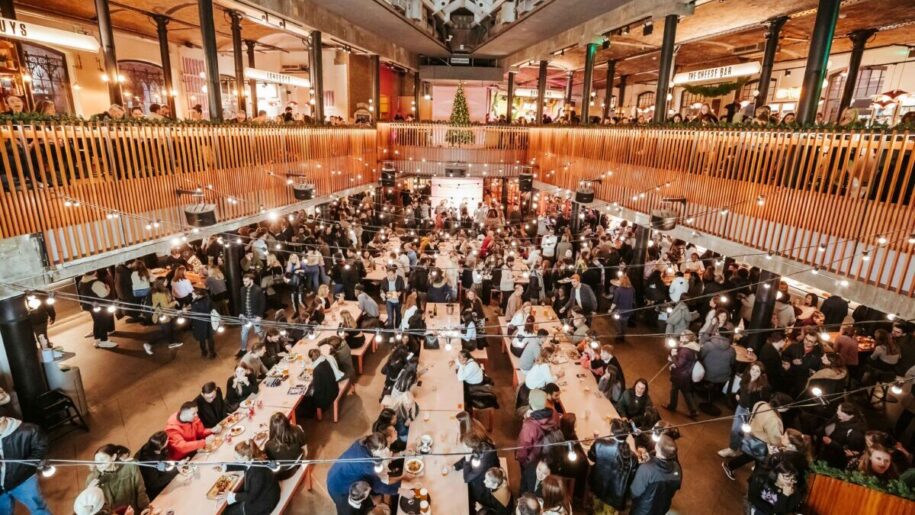
Searching for the best food hall POS isn’t about finding the most popular restaurant system, it’s about finding a platform that can handle the unique complexity of multi-vendor environments.
Food halls operate differently than restaurants. Multiple tenants, shared seating, peak traffic spikes, and operator-level financial oversight require technology built specifically for this model.
Here’s how to evaluate the best food hall POS system, and why purpose-built platforms consistently outperform retrofitted restaurant POS solutions.
What Makes a POS the “Best” for Food Halls?
The best food hall POS system must serve three stakeholders at once:
• Guests
• Vendors
• Operators
Most POS systems only optimize for one.
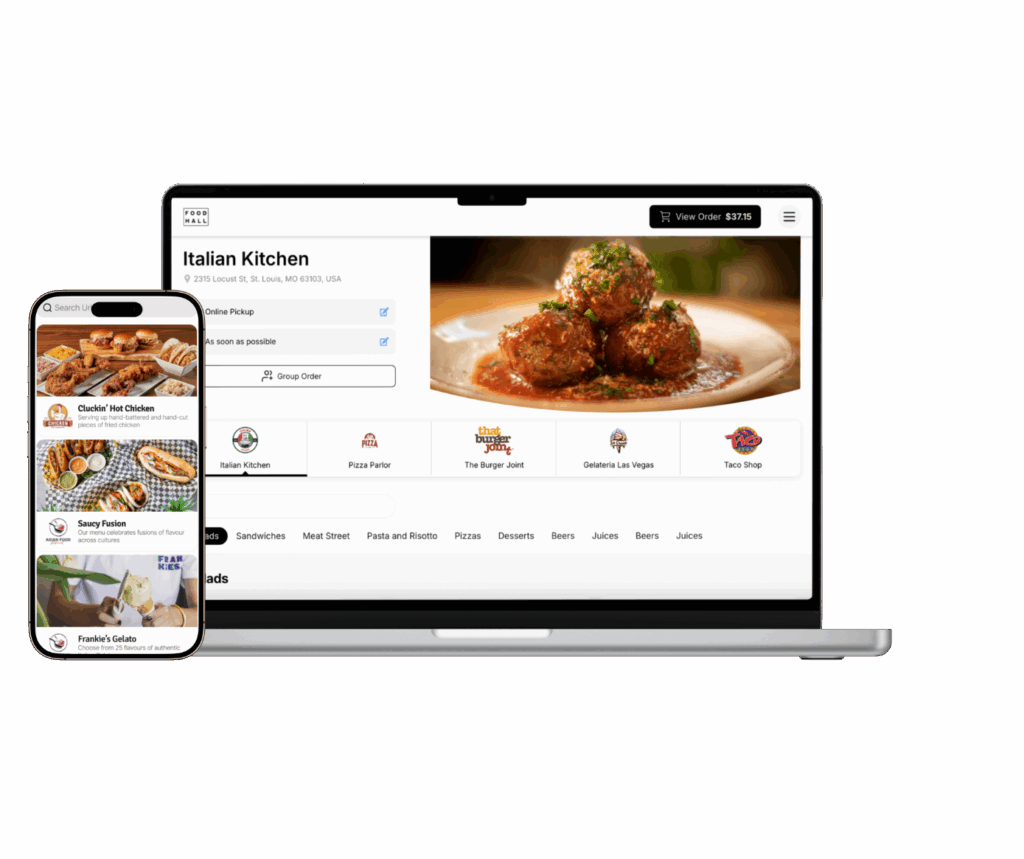
1. Unified Ordering Across All Vendors
The best food hall POS allows guests to order from multiple vendors in one transaction via QR codes, online ordering, or mobile devices.
Why it matters:
• Shorter lines
• Higher average ticket size
• Faster throughput during peak hours
If guests have to check out separately for each vendor, it’s not built for food halls.
2. Automated Rent Collection
Manual rent calculations are one of the biggest hidden operational drains in food halls.
The best food hall POS:
• Automatically collects a percentage of gross sales
• Deposits rent daily to the operator
• Eliminates spreadsheets and reconciliation
This feature alone can transform cash flow for operators.
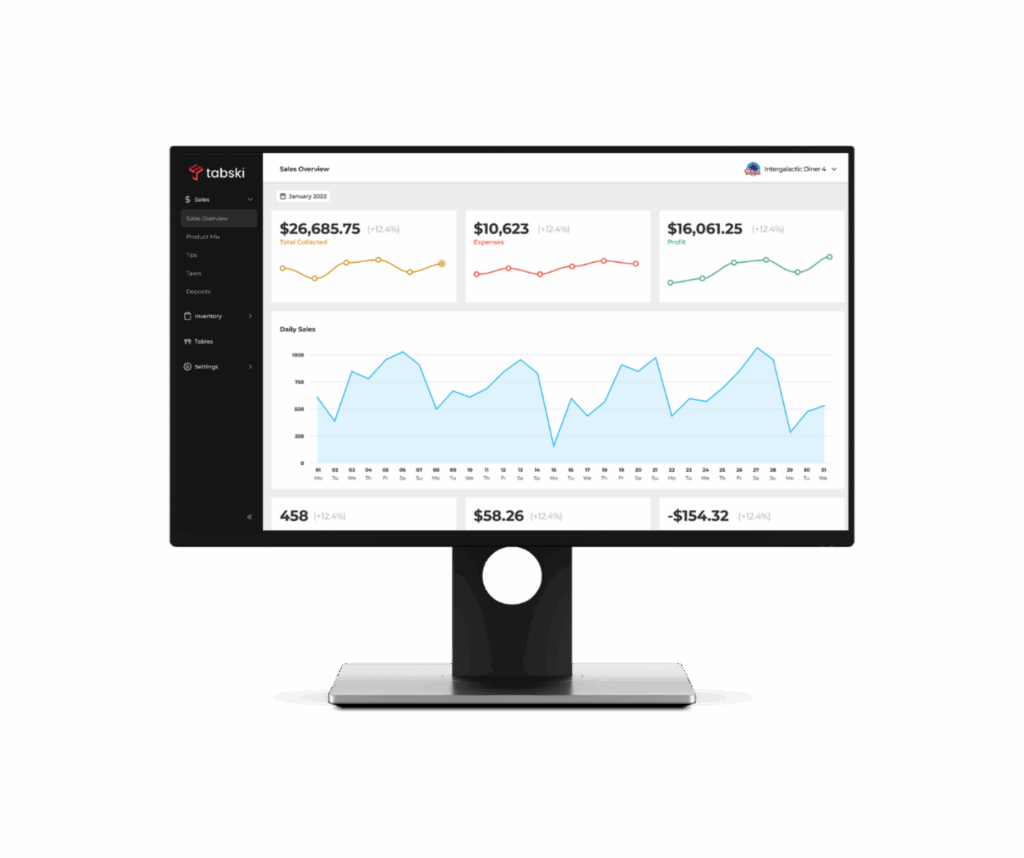
3. Operator-Level Visibility (Not Just Vendor Reports)
Food hall operators need more than individual tenant reports.
The best food hall POS provides:
• Real-time sales across all vendors
• Product mix and order pacing insights
• Early identification of struggling tenants
Without unified reporting, operators are managing blind.
4. Open Tabs & Smart Ordering Experiences
Food halls are social, high-traffic environments.
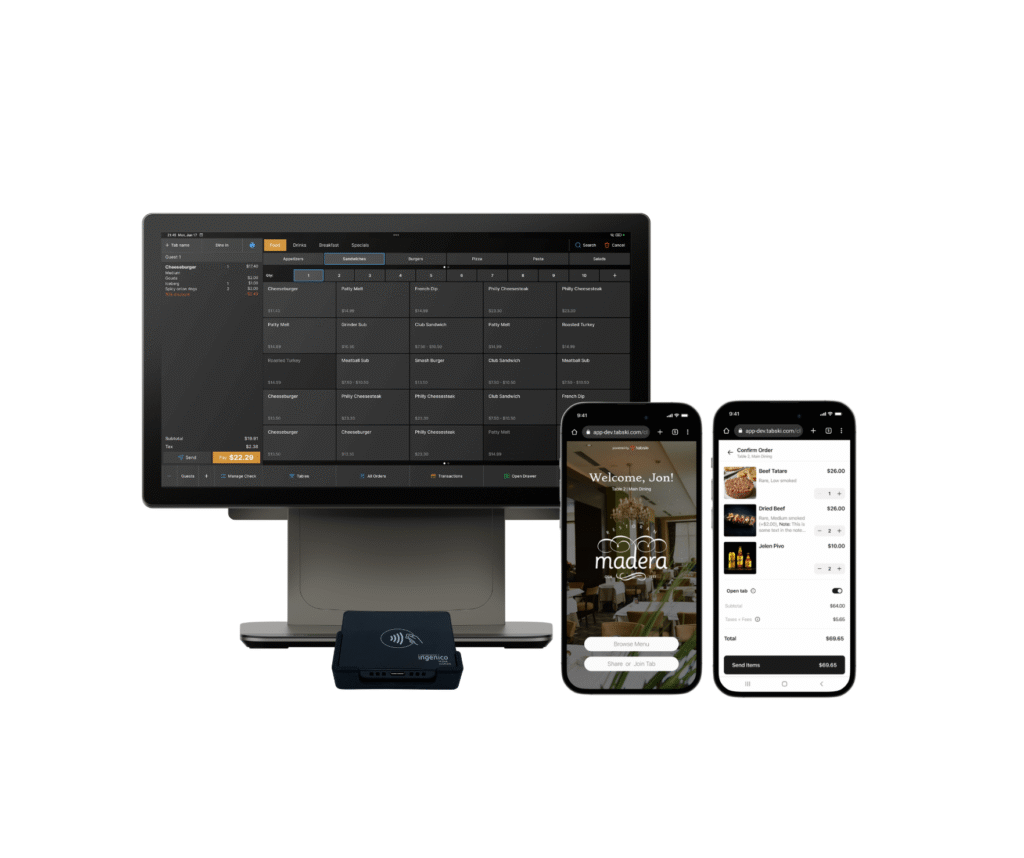
The best systems support:
• Open tabs across the property
• Seamless syncing with POS and KDS
• Flexible ordering without exchanging cards
This improves guest experience while keeping operations clean.
5. Brand-First Guest Experience
Generic third-party ordering platforms dilute the food hall brand.
The best food hall POS:
• Preserves the hall’s visual identity
• Allows custom menus, flows, and UX
• Feels native to the venue, not bolted on
Brand control matters more than operators realize.
Why Restaurant POS Systems Fall Short in Food Halls
Many operators start with traditional restaurant POS systems because they’re familiar. Over time, limitations become clear:
• No unified multi-vendor checkout
• Manual rent collection
• Fragmented reporting
• Limited operator oversight
• Guest friction during peak hours
These platforms were never designed for shared-space commerce.
Why Purpose-Built Food Hall POS Platforms Win
Purpose-built food hall POS systems are designed around multi-merchant logic from day one.
They treat the food hall as a single ecosystem — not a group of disconnected restaurants.
That difference unlocks:
• Higher sales velocity
• Lower operational overhead
• Better tenant retention
• Increased NOI per square foot
Why Many Operators Choose Tabski as the Best Food Hall POS
Tabski was built specifically for food halls and multi-vendor venues, not adapted later.
Tabski offers:
• One-checkout ordering across all vendors
• Automated daily rent collection
• Unified POS, QR, online, and delivery
• Real-time operator dashboards
• Seamless KDS and open-tab syncing
• Brand-controlled guest experience
For operators focused on NOI, scalability, and guest flow, Tabski checks every box.
Best Food Hall POS: Final Verdict
If your priority is:
• Increasing NOI without raising rent
• Reducing operational friction
• Improving guest experience
• Gaining real-time operator visibility
Then the best food hall POS is one that’s purpose-built for multi-vendor environments — not a restaurant system trying to adapt.
See Why Food Hall Operators Choose Tabski
👉 Book a Demo at https://tabski.com
📩 Contact: help@tabski.com | (866) 822-7544