

Why operators are ditching “patched-together” tech stacks for one platform that actually runs the building
Food halls are not restaurants.
They’re a living, breathing mini-city of tenants, shared seating, shared labor pressure, shared guest expectations, and a dozen different revenue streams happening at once. And yet most food halls are still forced to run on restaurant POS systems that were never built for multi-vendor environments… plus a pile of add-ons that don’t talk to each other.
The result?
- Guests hit friction (multiple lines, multiple checkouts, confusion)
- Tenants lose sales (slow throughput, missed orders, inconsistent experiences)
- Operators lose visibility (no clean reporting, rent collection headaches, zero leverage)
That’s why Tabski exists.
This is the “last POS you’ll ever need” for your food hall because it’s not just a POS. It’s a unified commerce and operations system designed specifically to automate the realities of a modern food hall.
Below is a full breakdown of the “perfect storm” of tools Tabski provides, and how they work together to increase throughput, improve tenant performance, and raise NOI per square foot.
1) QR Multi-Vendor Ordering With a Single Checkout
The fastest path to higher throughput (and fewer lines)
The most obvious food hall problem is also the most expensive: lines. Every minute a guest waits is a minute they’re not ordering another drink, dessert, or second vendor item.
Tabski’s QR ordering is purpose-built for food halls:
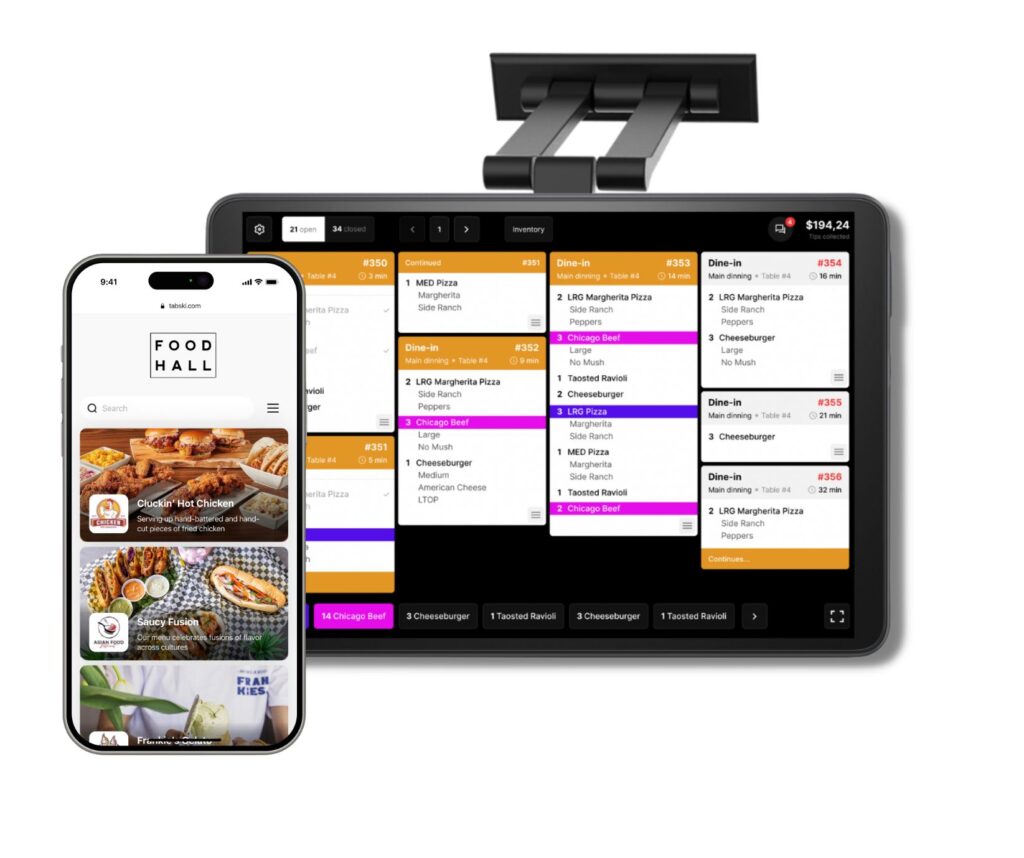
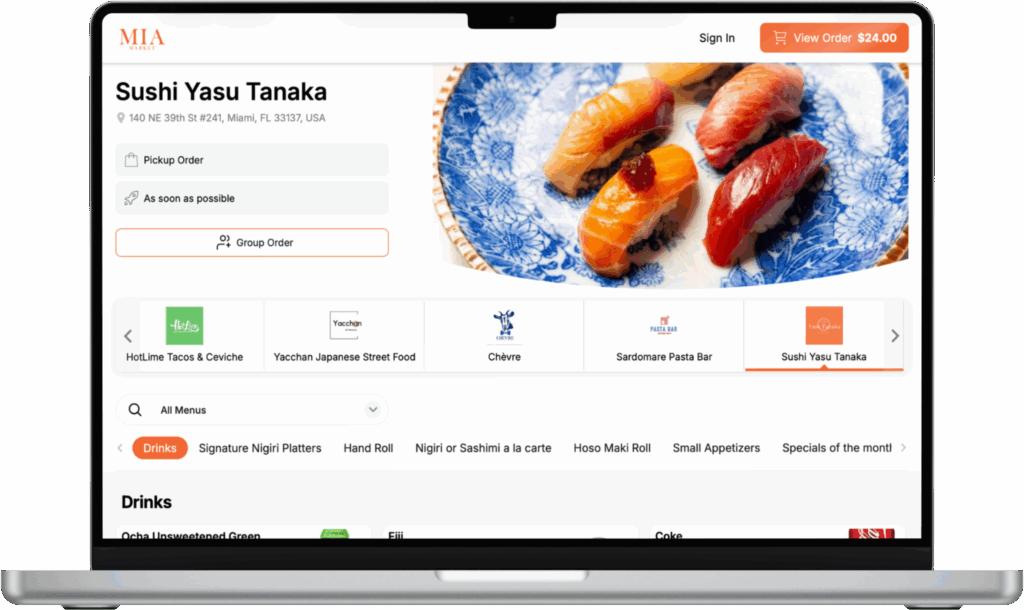
- Guests scan a code and can order from multiple vendors in one session
- One cart, one checkout, one receipt
- No “vendor hopping” or multiple payment experiences
- Designed for dine-in environments where speed matters
Why this changes your unit economics:
Single-checkout multi-vendor ordering increases basket size because it makes cross-vendor ordering feel normal. Instead of “I’ll grab tacos now and maybe come back later for ice cream,” it becomes “Add ice cream now.”
It also reduces vendor-by-vendor bottlenecks because ordering becomes distributed across the room instead of concentrated at a counter.
2) Online Ordering + Delivery Integrations With 0% Delivery Costs to Tenants
Bring in off-premise revenue without punishing your vendors
Most delivery “solutions” come with a hidden tax: tenant margins.
Tabski enables online ordering and delivery integrations designed to keep costs fair, especially in multi-tenant environments where each vendor is already paying rent, labor, and food costs.
What this means in practice:
- Your hall can offer a unified online ordering experience
- Delivery can be connected without stacking traditional delivery marketplace fees on every tenant
- Operators can drive incremental orders without forcing vendors into bad economics
Why it matters for retention:
When tenants feel like “the building” helps them grow (without eating their margin), they stay longer and invest more in quality, staff, and menu innovation.
3) Kitchen Display Systems Built for Order Accuracy, Speed, and Operator Control
KDS is not just a screen, it’s your throughput engine.
Tabski KDS is designed to do more than show tickets. It’s built to help food halls handle peak demand while keeping accuracy high.
Key capabilities include:
- Clear ticket routing to kitchens, bars, and prep stations
- Order pacing controls to manage rushes without chaos
- Order tracking so customers can see real-time status
- Payment-aware workflows so teams know what’s paid, open-tab, or pending
- Optional SMS notifications so guests know when orders are ready (reducing “Where’s my food?” interruptions)
Why operators love this:
You can manage the building like a system, not a group of disconnected restaurants.
When order pacing and visibility improve, you reduce comped orders, refunds, and the “silent churn” of guests who decide the hall is too hectic to return.
4) Android POS + Tap-to-Pay + Modern Hardware
A counter POS that doesn’t feel stuck in 2012
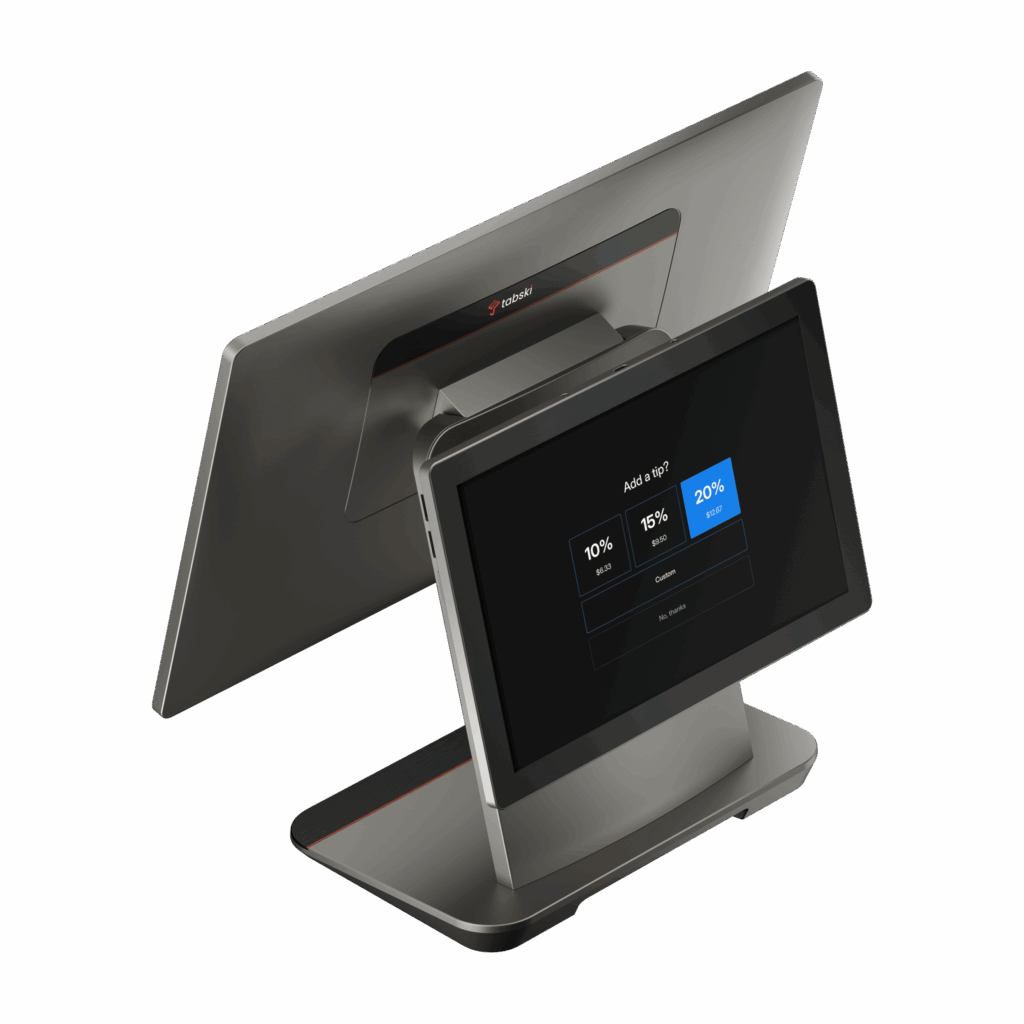
Tabski POS is built for modern service styles: fast casual, full-service bars, kiosks, hybrid counter service, and food hall workflows.
Core POS strengths:
- Android-based hardware for affordability and flexibility
- Tap-to-pay support for quick transactions
- Fast item lookup and modifier flows built for speed
- Supports vendors with different concepts (coffee, cocktails, tacos, retail) inside one system
Why this matters in a food hall:
Standardizing tenant tech reduces training time, improves reporting consistency, and makes operator-level analytics possible.
5) Smart Tabs
The “open tab anywhere” experience guests expect
Food halls are social spaces. Guests roam. They order in waves. They don’t want to close out every time.
Smart Tabs are designed to let guests:
- Keep an open tab for repeat ordering
- Order from anywhere on property
- Maintain a consistent experience whether they’re at a bar, table, or standing area
Result: faster repeat purchases and less payment friction.
This is one of the simplest ways to increase per-guest spend without changing a single menu item.
6) Automated Rent Collection — Daily, Based on Real Sales
The operator’s superpower: real-time rent without chasing anyone
Rent collection is where food halls either become elegant… or exhausting.
Tabski can automate rent collection daily based on a percentage of sales:
- Rent is calculated automatically
- Funds are collected consistently, reducing month-end surprises
- Operators get predictable cash flow
- Tenants stay aligned because rent matches performance
Why this is a “perfect storm” feature:
Rent is no longer a spreadsheet task. It becomes a financial system that runs itself.
7) 7shifts for Payroll and Scheduling
Make labor easier across a complex environment
Labor is the second biggest stressor after rent. Scheduling and payroll get messy fast when you’re juggling multiple concepts, multiple managers, and high turnover.
By integrating with 7shifts, Tabski helps food halls:
- Sync sales and labor insights where they matter
- Support better scheduling decisions
- Keep teams organized without patchwork tools
The goal is simple: reduce admin time and improve staffing accuracy.

8) Gift Cards That Work Everywhere
One gift card for the entire hall (the way guests assume it works)
Food halls thrive on gifting: birthdays, office lunches, date nights, “let’s meet there.”
Tabski supports gift cards designed for multi-tenant realities:
- Gift card issuance and redemption across vendors
- Balance checking at POS and across ordering channels
- Works for in-person and digital experiences
Operator-level upside:
A hall-wide gift card program becomes a reliable acquisition channel. It’s also one of the cleanest ways to drive off-peak traffic.
9) Discounts, Promos, and Dynamic Offers
Drive traffic intentionally, not randomly
Food hall marketing should not be “post and pray.”
Tabski supports promotions and discounts so operators and tenants can:
- Run targeted offers (weekday, late night, events)
- Drive bundled behavior (food + drink, multi-vendor incentives)
- Promote slow-moving inventory without chaos at checkout
When promotions tie into unified ordering, they become measurable and repeatable.
10) Accounting and Compliance: QuickBooks + DAVO Sales Tax
Back office automation that keeps you out of trouble
It’s not glamorous, but it’s critical: accounting and tax compliance can crush operators and tenants if it’s manual.
Tabski helps modernize the back office with integrations like:
- QuickBooks Online for cleaner financial mapping and reporting
- DAVO sales tax automation for merchants who want hands-off sales tax filing and remittance
Why this matters in a food hall environment:
When tenants have fewer administrative burdens, they perform better and churn less. When operator reporting is standardized, it becomes easier to manage the property like a real asset.
11) Inventory + Reporting + Operator Visibility
One view of the entire ecosystem
The real advantage of an all-in-one food hall platform is not “features.” It’s the compounding effect of everything being connected.
When ordering, POS, KDS, rent, promos, accounting, and labor live inside one ecosystem:
- Operators can identify struggling tenants faster
- Vendors can make menu decisions based on real performance
- You can measure throughput, conversion, and peak-time stress points
- The entire building becomes optimizable
This is the “perfect storm” — not one tool, but a fully connected operating system.
The Perfect Storm for Automating Food Hall Technology
Most food hall tech stacks are built like this:
POS + 3rd party online ordering + delivery marketplaces + separate KDS + spreadsheets for rent + separate gift cards + separate accounting + separate labor tools + separate reporting…
That’s not automation. That’s complexity.
Tabski is built so food halls can run on a single platform where:
- Guests order faster and more often
- Tenants keep more of what they earn
- Operators collect rent consistently and see what’s happening in real time
- Everyone spends less time reconciling systems and more time running the business
Ready to see what your hall looks like on a single system?
If you want to increase NOI per square foot, reduce tenant churn, and give guests a frictionless multi-vendor experience, Tabski was built for you.
Learn more at Tabski.com
Or contact us: help@tabski.com | (866) 822-7544