
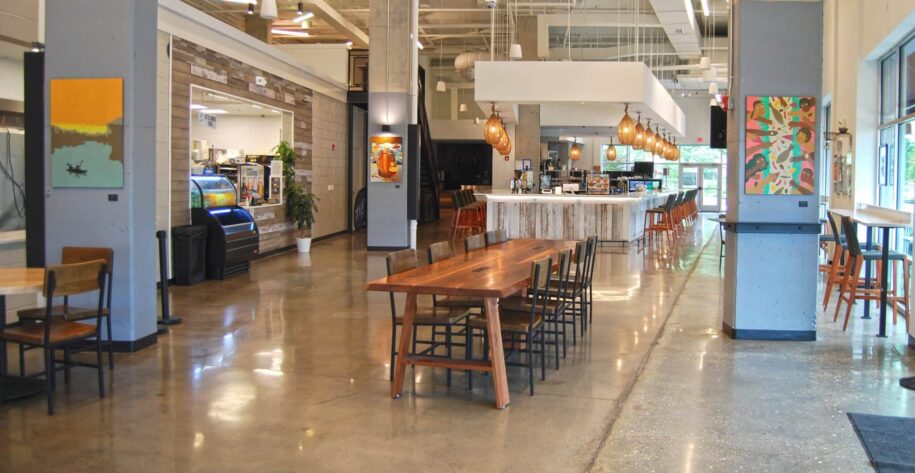
Food halls are vibrant, high-volume, multi-vendor environments. They’re also complex: multiple menus, peaks and lulls, shared seating, and a constant dance between discovery and throughput. Digital ordering (QR codes, kiosks, and mobile web) turns that complexity into an advantage—streamlining labor, improving guest experience, and giving operators the data they need to grow.
Here’s how it pays off for everyone.
1) Tenant Benefits: Do More With the Same Crew
a) Shift labor from “ringing” to “making.”
When guests place orders on their phones or a kiosk, your front-of-house team isn’t tied to a register. That frees staff to prep, expedite, and maintain quality—exactly where they create the most value at peak.
b) Shorter lines without hiring.
Lines don’t vanish; they move online. Guests join a digital queue immediately, orders flow into the kitchen display system (KDS), and you absorb more demand with the same headcount.
c) Fewer ordering errors.
Guests choose their own modifiers and allergy notes. Clear, structured tickets reduce remakes and awkward comps—protecting margins during crunch times.
d) Automatic, consistent upsells.
Smart prompts (“Make it a combo,” “Add a side for $2,” “Top with avocado”) raise average ticket without sales scripts or extra staff training.
e) Real-time inventory and 86’ing.
Run low on short rib? Toggle items off or cap counts, and the menu updates instantly across channels. No more “sorry, we’re out” at pickup.
f) Smoother peaks, fewer walk-aways.
Mobile ordering smooths demand spikes by letting guests order from anywhere in the hall. More baskets, less friction.
g) Clean tickets, faster handoff.
Paid orders arrive already authorized with name, order number, and ready-by estimates. Staff can focus on accurate, fast assembly.
2) Consumer Benefits: Faster, Clearer, More Fun
a) Order from your seat.
Scan, browse, customize, and pay without standing in line. Guests can keep the conversation going and still try multiple vendors.
b) Transparent wait times.
Real-time prep estimates and order tracking reduce anxiety (“Did they get it?”). SMS alerts let guests wander—and return right on time.
c) Fewer mistakes, more control.
Digital menus clarify ingredients, allergens, portion sizes, and prices. Guests see exactly what they’re getting, how it’s made, and when it’ll be ready.
d) Easy discovery across vendors.
Search, filters, and featured items make it simple to explore the hall. Cross-vendor carts help groups coordinate without splitting up.
e) Modern payments and receipts.
Tap-to-pay, saved cards, and e-receipts speed checkout and simplify expense tracking.
3) Operator Benefits: More Throughput, Cleaner Reconciliations, Better P&L
a) Higher throughput without new lanes.
Digital ordering increases “virtual counter space.” One kiosk can replace a register; a hall-wide QR system can add an entire extra “line” during peaks.
b) Cleaner cash management and nightly close.
With digital payments, there’s less cash to count, fewer manual deposits, and fewer cash-mismatch headaches.
c) Automated revenue shares and rent.
For halls using percentage rent or platform fees, split funding at the batch level removes manual collection. Funds route automatically to the right parties—tenants, operator, and any revenue-share partners.
d) Unified guest experience across vendors.
Consistent UI, clear pickup zones, and standardized order updates reduce congestion and confusion. Your floor runs calmer, even when you’re slammed.
e) Staffing flexibility.
Because ordering is handled digitally, you can redeploy staff where they’re needed most—expediting, bussing, or running food during rushes; brand engagement during lulls.
4) The Data Advantage: See the Whole Hall, Not Just a Line
Digital ordering unlocks hall-wide visibility you’ll never get from clipboard counts or siloed registers:
- SKU-level sales by time of day: Spot winners, laggards, and cannibalization.
- Cross-vendor baskets: Understand how guests pair concepts (e.g., tacos + margaritas) to inform promotions and placement.
- Prep-time accuracy: Compare promised vs. actual ready times to coach teams and balance loads.
- Funnel analytics: See where guests drop off—menu load, category, item, modifier—and fix friction in minutes, not months.
- Campaign and promo impact: Tie redemptions to true incremental revenue.
- Tenant scorecards: Share clear, objective metrics—throughput, average ticket, on-time rates—to drive improvement and fair decisions.
For operators using percentage rent, data equals trust: transparent, auditable sales reporting reduces disputes and speeds payouts.
5) Practical Features That Matter in Food Halls
All-day kitchen view (KDS).
A cumulative “all-day” display helps kitchens forecast prep needs (e.g., total buns left to toast) and stay ahead during surges.
Item 86’ing and instant refunds.
If an item sells out, tenants can reject the line with a reason; guests receive an immediate update and refund, preserving goodwill.
Order staging and zones.
Clear routing (make, pack, stage) and labeled pickup zones reduce crowding and handoff errors.
Tab syncing (for bars and shared tabs).
Open-tab tokens let guests add drinks or desserts from other vendors without re-entering payment—a huge lift for average ticket.
SMS and real-time tracking.
Automated alerts mean fewer “Is my order ready?” interruptions at the counter and smoother service flow.
6) Financial Upside: More Revenue, Higher Margins
- Average ticket growth via cross-sell and upsell prompts.
- More orders per hour with the same (or fewer) registers.
- Lower comp and waste from reduced errors and better inventory signaling.
- Labor ROI by reallocating staff from order entry to production and hospitality.
- Reduced churn as guests enjoy shorter waits and clearer communication.
7) Rollout Tips for a Smooth Launch
- Pilot during a controlled window. Start with QR ordering for one zone or daypart, then expand.
- Train for the new flow—not just the new screen. Emphasize staging, expo, and 86’ing habits.
- Standardize pickup language and signage. One system, one set of cues, fewer bottlenecks.
- Measure weekly. Track prep-time accuracy, average ticket, and completed orders per labor hour. Share tenant scorecards early and often.
- Promote discovery. Use featured menus and hall-wide promos to encourage cross-vendor ordering.
The Bottom Line
Digital ordering isn’t just a convenience—it’s an operating system for modern food halls. Tenants produce more with the same team, guests enjoy faster and clearer experiences, and operators gain the data and automation to scale profitably. When you replace guesswork with real-time orders, transparent queues, and SKU-level insights, the whole hall hums.