
By Tabski: The All-in-One Food Hall POS & Digital Ordering Platform
Food halls are booming across the U.S. and quickly becoming centerpieces of mixed-use developments, retail districts, and destination entertainment projects. When done right, they generate exceptional foot traffic, encourage longer dwell times, and provide a powerful platform for local food entrepreneurs.
But here’s the truth most developers and operators won’t say out loud:
More food halls underperform due to operational mistakes than due to demand.
After working directly with operators, developers, and brokers across the country, we’ve identified the seven most common issues that quietly drain revenue, frustrate guests, and cause vendors to churn.
Let’s break them down — and show how modern food halls correct them.
1. Fragmented POS Systems Across Vendors
The Problem:
Many food halls let vendors bring their own POS (Toast, Square, Clover, etc.). That sounds flexible, but it leads to chaos:
- No unified reporting
- No central gift cards or loyalty
- No shared online ordering
- Tenants underreporting sales
- Zero ability to collect rent automatically
- Long lines, slow ordering, and guest confusion
Why It Fails:
Food halls are multi-vendor environments and require a unified architecture. Traditional restaurant POS systems were never built for this.
The Fix:
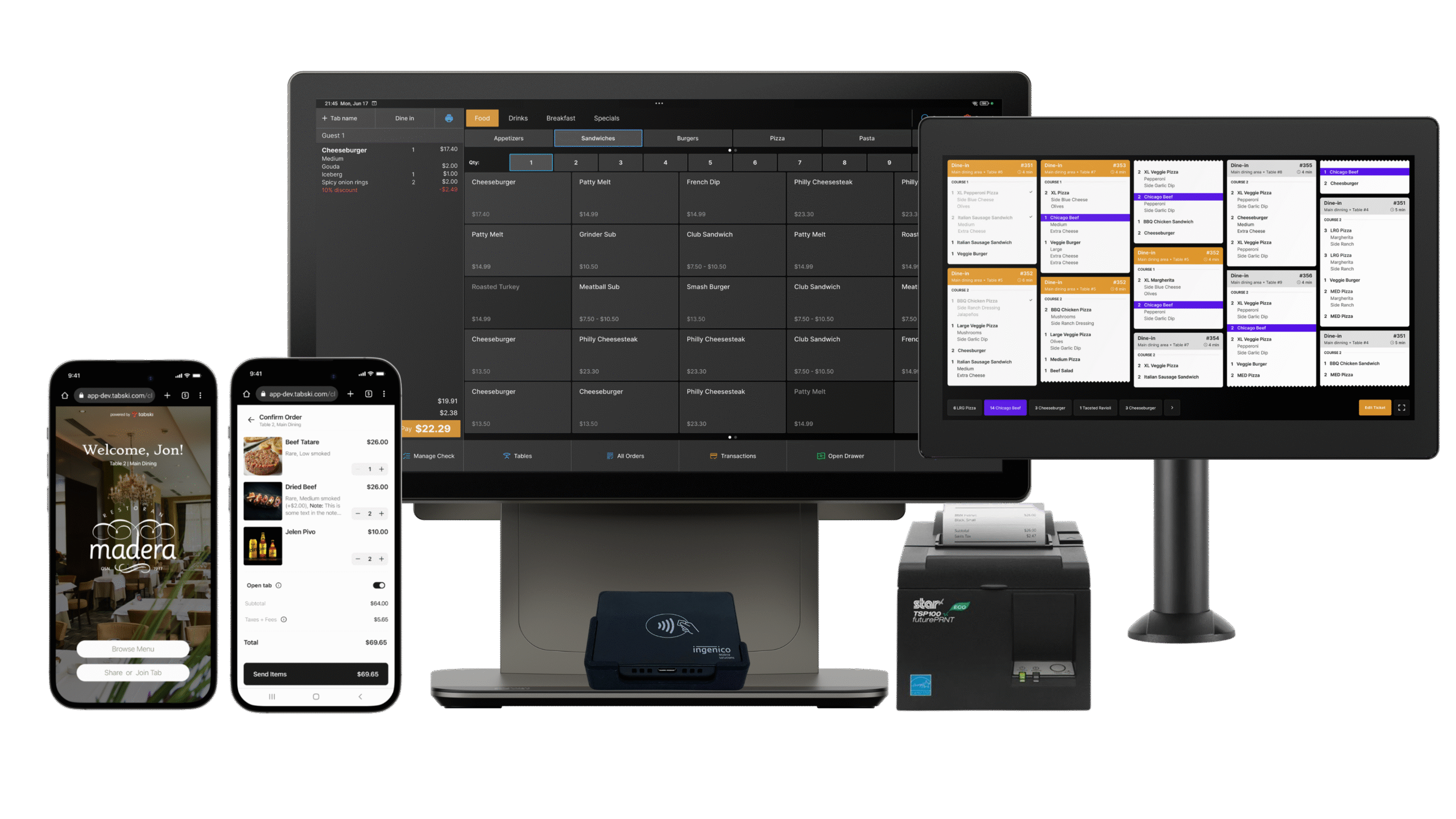
Use a multi-vendor POS that supports shared ordering, shared carts, unified reporting, and automated rent collection.
(Example: Tabski ties all vendors into one system, even if they have individual menus, pricing, or concepts.)
2. No Multi-Vendor Ordering
The Problem:
Families and groups hate splitting up to order at different stalls. When each vendor operates in a silo:
- Guests wait in multiple lines
- Children get their food before adults
- Alcohol lines bottleneck the entire hall
- Guests place fewer orders overall
This is the biggest killer of dwell time and repeat purchases.
The Fix:
Enable customers to order from multiple vendors in one cart, on mobile, online, or at a shared POS. When they can mix tacos, pizza, and cocktails in a single checkout, order volume jumps.
3. Manual Rent Collection & Vendor Underreporting
The Problem:
Relying on spreadsheets, email reminders, or manual audits is a recipe for leakage. Even honest vendors make reporting mistakes.
Industry data shows tenant underreporting can reach 6–12% annually.
The Fix:
Automate rent at the transaction layer. With split funding (Tabski + Payrix), every sale flows:
Customer → Vendor → Landlord
instantly and automatically.
No invoices, no audits, no disputes.
4. Slow Ordering and Long Lines
The Problem:
Food halls peak hard; weekends, concerts, events, sports games, lunch rush. If ordering lines are slow, your revenue caps out early and guests leave.
Common bottlenecks include:
- Alcohol-only ordering lines
- Vendors who aren’t digitally enabled
- Manual card swipes at stalls
- No QR codes or kiosks
- Slow kitchens without throttling
The Fix:
A digital-first model increases throughput by 20–40%.
That means:
- QR ordering at tables
- Multi-vendor mobile ordering
- Dedicated alcohol ordering rails
- Smart Tabs / order throttling during spikes
Digital throughput = more orders per hour = higher NOI.
5. No Centralized Digital Strategy (Online, Delivery, Promo Codes)
The Problem:
Most food halls treat digital ordering as an afterthought — or worse, they let each vendor fend for themselves on DoorDash and UberEats.
This creates:
- Higher commissions
- Inconsistent hours
- Wrong menus
- Missed revenue
- Delivery drivers flooding pickup areas
The Fix:
Run all digital ordering from a single platform:
- Multi-vendor ordering
- In-house delivery
- Multi-vendor promo codes
- Gift cards (coming soon)
- Scheduling & order ahead
A single engine = more revenue and better brand control.
6. Poor Layout and Guest Flow Decisions
The Problem:
Successful food halls understand guest psychology. Many failing halls:
- Hide the bar in the back
- Place high-volume vendors in high-congestion areas
- Don’t clearly mark pickup shelves
- Spread vendors too far apart
- Don’t offer enough seating or communal areas
The Fix:
Design for dwell time and discovery:
- Place the bar where people naturally land
- Use digital signage to guide ordering
- Build clear, organized pickup areas
- Create zones for families, groups, and remote workers
- Use data to rearrange vendors over time
Food halls that prioritize flow earn more per square foot.
7. No Unified Data or Reporting for Operators
The Problem:
When vendors use different systems, operators get only fragments of information. That makes it nearly impossible to:
- Understand peak segments
- Forecast sales
- Manage labor
- Evaluate vendor performance
- Sell sponsorships
- Optimize tenant mix
You can’t improve what you can’t measure.
The Fix:
Use a centralized, real-time dashboard that aggregates:
- Total sales
- Sales by vendor
- Alcohol vs food mix
- Peak hours
- Order type breakdown
- Digital adoption
- Rent collected
- Platform fee revenue
When operators can see the whole picture, they can make smarter decisions.
Final Thoughts: Food Halls Don’t Fail, Their Systems Do
The underlying theme across all seven issues is simple:
Most food halls fail because they try to operate like 10–20 separate restaurants instead of one connected ecosystem.
The winners are the halls that treat technology as a revenue engine — not an afterthought.
Tabski was built from the ground up for multi-vendor environments.
If you’re opening a hall or upgrading your tech stack, we can walk you through:
- Multi-vendor architecture
- Automated rent collection
- Digital ordering strategy
- Multi-vendor promo codes
- Vendor onboarding
- KDS + kitchen flow
- Payment splitting
- Offline redundancy
- Platform fee monetization