
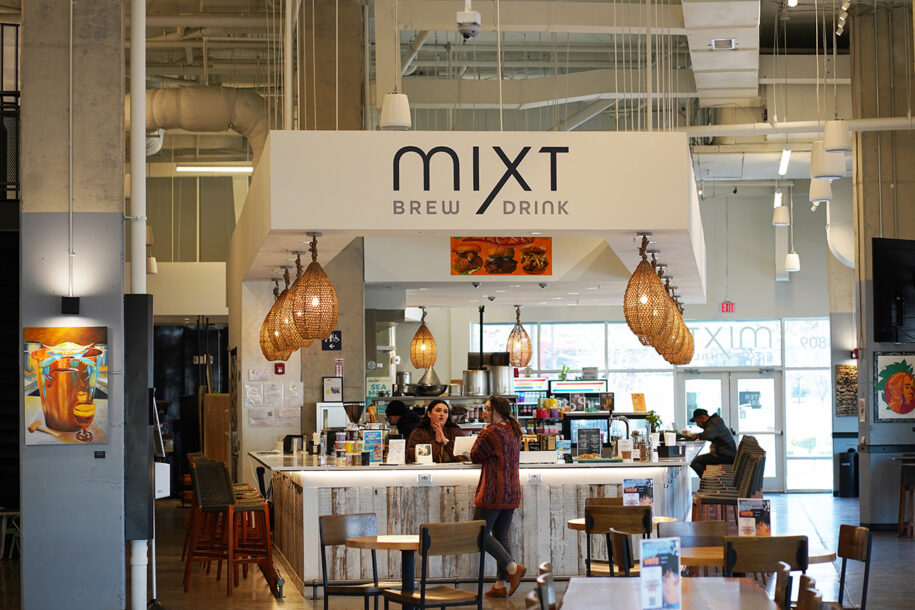
Exploring the MiXt Food Hall model and what it teaches us about multi-vendor ordering, operations, and guest experience.
The Modern Food Hall: Where Convenience Meets Complexity
Food halls have quickly evolved from novelty concepts into anchors of local dining economies. What began as urban market experiments has turned into a preferred model for developers and entrepreneurs looking to combine community, variety, and profitability under one roof.
But with that growth comes complexity.
Every vendor has their own brand, menu, and sometimes even their own POS. Guests wander through multiple stations, place several orders, and juggle multiple receipts. Behind the scenes, operators reconcile deposits, rent, and service fees across a patchwork of systems.
This fragmentation is one of the biggest operational pain points facing the industry today — and solving it requires a deeper look at how unified checkout systems are changing the economics of shared-vendor environments.

MiXt Food Hall unlocks multi-vendor ordering without a POS rip-and-replace
In a mixed-use apartment building where the operators also own the full bar, MiXt needed a unified ordering experience that lets tenants and guests build one cart across multiple restaurants—regardless of whether those kitchens run on Square, Clover, Toast, or something else.

The Problem
MiXt operates inside an apartment building and also owns the full bar. Kitchens run a variety of POS systems like Square, Clover, and Toast. They needed a streamlined way for residents and walk-in guests to order from multiple tenants in a single checkout without forcing every vendor to switch POS.
- Mixed POS environment across tenants
- Full bar must coexist with food vendors
- No appetite for a full POS overhaul
The Tabski Approach
Tabski deployed its multi-vendor ordering layer that sits above existing systems. Guests scan a QR or tap a link, build one cart across vendors, and pay once. Tabski routes each item to the right kitchen and automatically splits deposits and rent at batch time—with no manual reconciliation.
- Unified cart across multiple vendors
- KDS and order routing per kitchen
- Automatic split deposits and daily rent
- Works alongside existing POS setups
Try It Yourself

- Guests add items from different vendors into one cart
- Each item routes to the correct kitchen or bar automatically
- Payouts and rent are split per vendor with zero extra work
The MiXt Food Hall Case Study: A Real-World Example
MiXt Food Hall, located just outside Washington, D.C., is a vibrant collection of local chefs, makers, and retailers. It serves both apartment residents in the same building and walk-in guests from the surrounding community.
Early on, MiXt faced a challenge common to many operators:
- Each vendor used a different POS system (some Square, some Clover).
- Guests needed to pay separately at each counter.
- Tenants managed their own orders and reporting independently.
The experience was fragmented for guests and time-consuming for staff.
When the management team began looking for ways to modernize, they evaluated solutions that could connect all vendors through a single digital checkout experience without disrupting each tenant’s independence.
What a Unified Checkout Actually Means
A unified checkout doesn’t just combine menus. It fundamentally redefines how a food hall processes orders and payments.
Here’s how it typically works:
- One QR Code, One Marketplace — Guests scan a code or open a digital menu that includes all vendors in the hall.
- Single Payment — They can order a burger from Vendor A, dumplings from Vendor B, and a cocktail from the bar — and pay once.
- Automatic Routing — Behind the scenes, the system splits the order by vendor and sends each item to the correct kitchen display.
- Automated Settlements — At the end of the day, each vendor’s revenue is automatically deposited into their bank account, along with rent deductions and shared-fee adjustments.
In MiXt’s case, the shift to unified checkout led to tangible operational gains:
- 15–20% increase in average ticket size (guests tend to order more when they can combine cuisines).
- Reduced wait times due to centralized order management.
- Fewer accounting errors and rent disputes.
The Data Behind Cross-Vendor Ordering
Consumer behavior studies across the hospitality industry reinforce what MiXt experienced: when friction is reduced, total sales rise.
- According to Hospitality Technology, 67% of diners say convenience directly impacts their likelihood of ordering again.
- Digital orders with multi-item carts generate, on average, 30% higher ticket values than single-vendor orders.
- In multi-tenant environments, shared checkout encourages cross-pollination between vendors — guests discover new favorites they wouldn’t have visited otherwise.
By consolidating checkout, food halls are turning what used to be an operational headache into a shared marketing advantage.
Operational Implications for Landlords and Tenants
Beyond guest convenience, unified checkout systems streamline how operators manage revenue distribution, rent collection, and vendor analytics.
For landlords, automation means fewer spreadsheets and faster reporting cycles. For tenants, it creates transparency — daily summaries clearly show gross sales, deductions, and net payouts.
At MiXt, this transparency improved vendor relationships. Instead of reconciling weekly reports manually, the management team could pull centralized data instantly. Vendors appreciated the accuracy and trust built through clear reporting.
For operators exploring digital transformation, food hall POS systems like this offer infrastructure specifically designed for multi-merchant setups — not adapted from single-restaurant software.
Guest Experience: The Hidden Multiplier
The guest experience in food halls often determines repeat traffic. Long lines or multi-checkout confusion can erode the sense of community that food halls aim to foster.
By simplifying ordering into one unified experience, MiXt not only improved operations but also elevated its brand perception. Guests could enjoy the hall more like a shared restaurant than a maze of counters. The change wasn’t flashy — it was subtle, frictionless, and ultimately profitable.
Key Takeaways for Food Hall Developers and Operators
- Simplify the Guest Journey: Fewer checkouts mean more completed orders and larger average spends.
- Automate Settlements: Split-funding removes manual reconciliation and reduces accounting errors.
- Encourage Cross-Vendor Discovery: Unified menus expose guests to the entire ecosystem, not just a single brand.
- Build Transparency with Tenants: Centralized reporting strengthens trust and collaboration.
- Invest in Scalable Infrastructure: Choose systems built specifically for food halls and multi-vendor spaces — not retrofitted restaurant POS solutions.
For a deeper look at how unified checkout technology supports these outcomes, explore the Food Hall POS overview to understand how routing, reporting, and automation align behind the scenes.
Final Thought: Technology as a Bridge, Not a Barrier
The best food halls blend human connection with digital convenience. The goal isn’t to replace hospitality with screens — it’s to remove friction so that both guests and vendors can focus on what they do best.
MiXt Food Hall’s success shows that when technology is used thoughtfully, it can unify dozens of small businesses under one seamless customer experience.