Competing with Toast by Focusing Where They Don’t: How Tabski Won a Complex Food Hall Deal
There’s been a lot of discussion lately in the payments and POS space about how hard it is to compete with Toast. They’ve raised billions, dominate mainstream restaurant POS, and have an army of engineers. But what most people miss is that you don’t have to compete feature-for-feature — especially if you’re bootstrapped.
At Tabski, we’re a self-funded startup with 15 engineers. Instead of trying to outbuild or outspend giants like Toast or Square, we chose to go deep into underserved segments of hospitality that require more operational complexity than the average restaurant — food halls, mixed-use developments, and multi-vendor venues with separate merchant accounts and shared guest experiences.
Finding the Gap: Where Traditional POS Systems Break Down
A food hall isn’t one business — it’s often 10 to 15 unique businesses operating under one roof, each with its own MID, tax ID, menus, and staff. Guests, however, see one destination. They expect to order from multiple vendors, pay once, and track everything from their phone.
Traditional POS systems like Toast weren’t built for that. They struggle with multi-merchant routing, automated rent collection, and unified ordering across multiple kitchens and bars. That’s where Tabski comes in.
Building for Complexity: Android POS and Unified Ordering
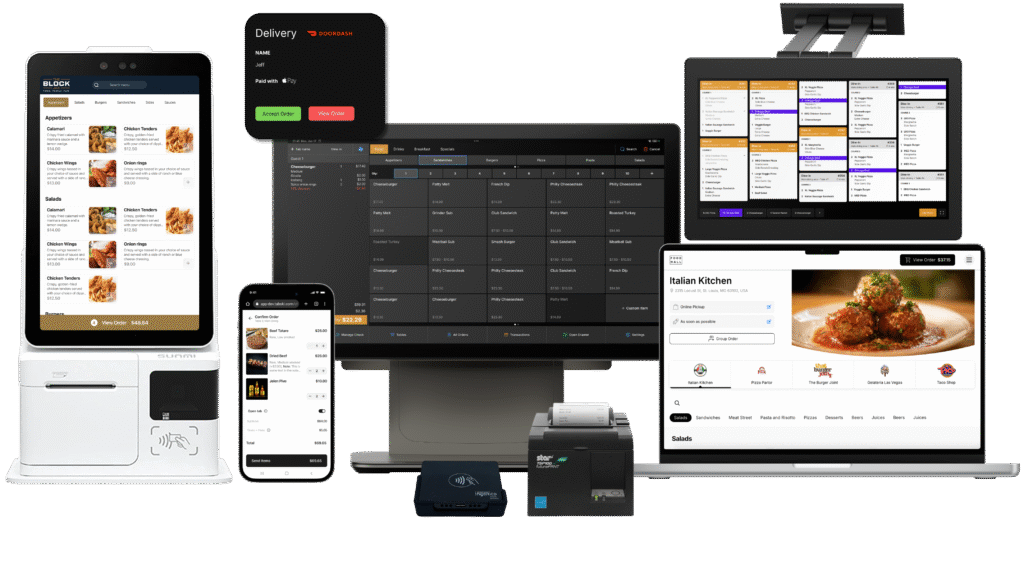
We built Tabski on Android with full tokenization support — allowing guests to store their cards on file like Uber and order again seamlessly.
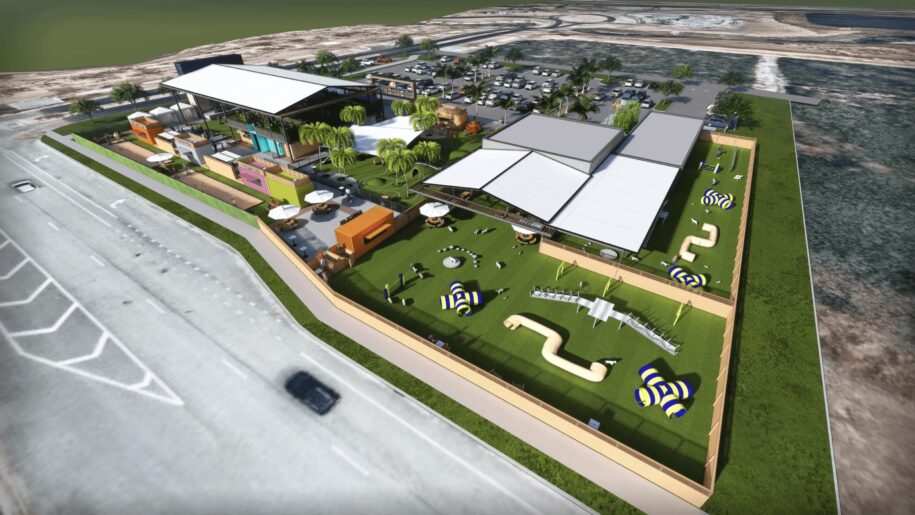
From there, we unified all menus within a food hall into one digital experience. Guests can browse eight restaurants, three full-service bars, and even a dog park bar, add items from multiple merchants to a single cart, and check out once.
Behind the scenes, Tabski automatically splits transactions across multiple MIDs and routes each order to the appropriate KDS (kitchen display system). Guests get one receipt, operators get automated reconciliation — and everyone wins.
Creating New Revenue Streams for Operators and ISVs
Every mobile order includes a $0.99 convenience fee for guests who prefer to skip the line. Tabski shares that revenue with the food hall operator — and here’s the part most payment pros appreciate:
That split happens automatically. Our system separates the fee from each tenant’s daily batch, funds it to Tabski as SaaS revenue, and sends the operator’s share to their account.
This transforms what’s usually a cost center (digital ordering) into a profit-generating model for both the ISV and the venue — all while keeping tenants compliant and automated.
Automating Rent Collection Through Integrated Payments
Another huge pain point for food hall owners is rent collection. Most owners charge a percentage of daily sales — usually around 10–20%. Traditionally, that meant chasing tenants, reconciling reports, and waiting weeks for payment.
Tabski automates that entire process. Each vendor’s sales are settled nightly, and a fixed percentage (in this case, 15% of gross sales) is automatically deposited into the food hall owner’s account.
No invoices. No spreadsheets. No delays. Just daily, automated rent collection — powered by integrated payments.
Real-Time Guest Communication and Refund Automation
Each vendor operates their own KDS with integrated payments, giving them full control over orders in real time. If a menu item is out of stock, a tenant can issue a partial or full refund directly from the KDS — and the customer is instantly notified via SMS.
Beyond refunds, we also added real-time order tracking with text notifications. Guests know exactly when their food is ready and where to pick it up, whether they’re dining in, ordering for pickup, or getting delivery.
Chefs and bartenders can also adjust menu items, categories, and modifiers directly from the KDS — removing the disconnect between kitchen and front-of-house operations.
Why This Matters for Payment Professionals
For ISOs, agents, and PayFac partners, verticalized software like this represents the next era of payments. Instead of competing on basis points, you compete on automation, embedded value, and new revenue streams.
Food halls, breweries, dog park bars, and other complex venues are exploding across the country — yet few POS providers support multi-MID routing, automated rent splits, or unified digital checkout. That’s why the market is wide open.
We’re not trying to be everything for everyone. We’re building for environments the big players can’t serve effectively — and that’s where real growth (and margin) lives.
The Takeaway
Competing with Toast doesn’t mean cloning Toast. It means finding the verticals where they can’t win, solving the operational pain points they overlook, and monetizing those solutions creatively.
By focusing on automation, tokenization, and embedded payments — not flashy features — Tabski is proving that small, focused ISVs can not only survive in this market but thrive in it