
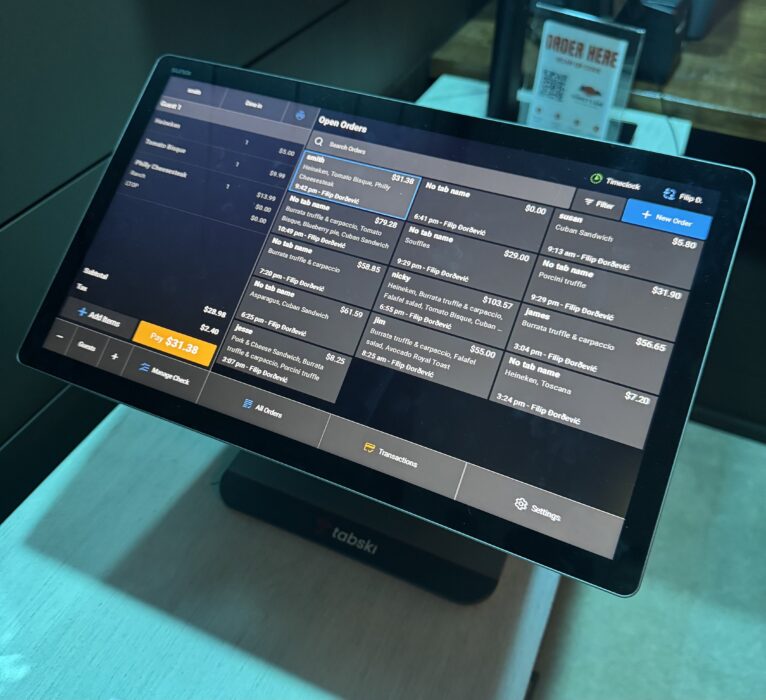
The restaurant POS market is dominated by giants like Square, Toast, and Clover. They have massive sales teams, billion-dollar war chests, and widespread brand recognition. For a bootstrapped startup, competing in this space might sound impossible.
But it isn’t. In fact, history shows that focused, nimble startups can carve out meaningful market share—especially when larger competitors are spread thin. By concentrating on underserved niches, moving quickly, and delivering operational value, a startup can not only compete but thrive.
Here’s how.
1. Specialize in a Niche and Solve It Completely
Large POS companies build products for everyone: quick-service restaurants, fine dining, salons, retail, and more. This breadth forces them to build generic, one-size-fits-all tools that often fall short in specialized environments.
A focused startup can win by going deep into a single segment—for example, food halls, dog park bars, or breweries—and solving their unique problems fully:
- Food halls need tools for multi-vendor ordering, automated rent collection, and shared infrastructure.
- Dog park bars need fast open-tab workflows, outdoor QR ordering, and flexible payment flows.
- Breweries often need minimal staffing with self-service ordering that integrates seamlessly into their taproom operations.
By becoming the expert in a niche, a startup can dominate segments that big players treat as afterthoughts.
2. Move Faster Than the Giants
Enterprise-grade roadmaps are slow. Incumbents have to navigate layers of approvals, legacy infrastructure, and conflicting priorities. A bootstrapped team can:
- Ship features in weeks, not quarters.
- Integrate emerging technologies like AI ordering or alternative payment rails faster than larger competitors.
- Respond to operator feedback quickly, often implementing requested features in real time.
Operators notice this. When customers feel heard and see improvements roll out rapidly, they become loyal advocates.
3. Offer Flexible Pricing That Reflects the Business Model
Big companies rely on standardized pricing to scale their sales organizations. But restaurant segments like food halls don’t always fit into those molds.
A startup can offer creative pricing structures that align with the operator’s economics, such as:
- Platform fees on digital orders to subsidize monthly SaaS.
- Revenue sharing with landlords to reduce operator overhead.
- Bundled pricing that includes operational tools like rent automation.
- Volume-based tiers tailored to niche adoption rates.
This flexibility allows a startup to deliver more value without racing to the bottom on processing rates.
4. Build Moats Through Operational Value
Many POS platforms focus primarily on payments and ordering. Startups can stand out by embedding themselves deeper into daily operations:
- Automate rent collection and payouts at the batch level.
- Provide tenant transparency and reporting in multi-vendor environments.
- Offer hardware setups tailored to unique layouts (e.g., shared bars, outdoor patios, vendor stalls).
- Integrate seamlessly with best-in-class third-party platforms for scheduling, payroll, and delivery.
When your POS becomes mission-critical infrastructure, not just a cash register, it’s much harder to replace.
5. Modernize Go-to-Market
Toast scaled through a massive outbound sales army. Square leveraged viral adoption. A lean startup can compete by blending both:
- Targeted outbound campaigns to niche segments with highly relevant messaging.
- Content marketing around specific operational pain points that incumbents overlook.
- Referral networks with landlords, developers, or consultants who influence purchasing decisions.
- Aggressive hardware incentives to lower upfront friction.
By keeping GTM lean and strategic, a bootstrapped startup can win customers efficiently—without spending like a unicorn.
6. Own One Problem First, Expand Later
The biggest mistake early-stage POS companies make is trying to match incumbents feature-for-feature. That’s a losing battle.
Instead, own one specific problem completely, then expand outward. For example:
Start with multi-vendor ordering → layer in rent collection → add mobile ordering + payments → expand into adjacent segments like breweries.
This focused expansion builds trust and product depth before taking on broader categories.
Final Thoughts
Competing with Clover, Square, and Toast doesn’t require matching their funding or headcount. It requires clarity of focus, speed, and operational depth. By solving a niche problem better than anyone else and aligning pricing and GTM strategies with operator realities, a bootstrapped startup can build durable market share in overlooked segments.
At Tabski, that’s exactly what we’re doing.
We focus exclusively on multi-vendor environments like food halls, dog bars, and breweries—segments where traditional POS systems fall short. By building tools that fit the way these operators actually work, we’re carving out a meaningful position in a massive market.
👉 Learn more about how Tabski helps food halls modernize their operations