
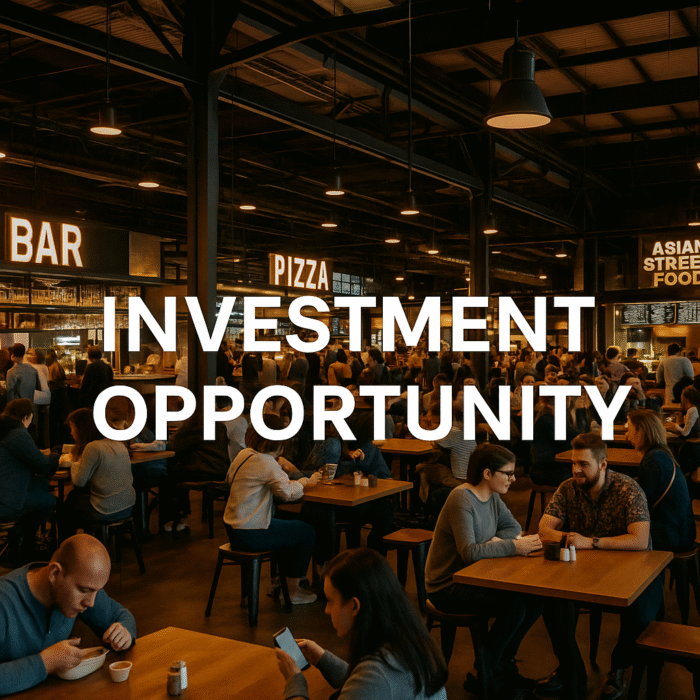
As retail continues to evolve and consumer habits shift toward experiential destinations, food halls have emerged as one of the most compelling asset classes for commercial real estate investors. These vibrant, multi-vendor dining destinations combine the best aspects of hospitality, retail, and placemaking—making them highly attractive for landlords seeking to maximize both revenue and foot traffic.
1. High Revenue Density and Diversified Tenant Mix
Unlike traditional restaurants or retail spaces that rely on a single tenant, food halls host multiple vendors under one roof. This multi-tenant structure spreads risk across a variety of operators while maximizing rentable square footage. A single 10,000–20,000 sq. ft. space can house anywhere from 8 to 20 food and beverage concepts, generating higher aggregate sales per square foot than a typical single-tenant lease.
For landlords, this diversification means:
- Lower vacancy exposure when one tenant leaves
- Stable, recurring revenue streams through percentage-based rent models
- Opportunities to attract both national brands and local favorites
2. Revitalizing Underutilized Assets
Food halls are ideal for adaptive reuse projects—transforming older buildings, warehouses, or retail spaces into bustling community destinations. For commercial real estate firms holding aging retail assets or vacant anchor spaces, a food hall can breathe new life into the property, attract complementary tenants, and drive surrounding property values upward.
Developers are increasingly using food halls as anchor attractions in mixed-use developments, drawing consistent foot traffic that benefits adjacent office, residential, and retail components.
3. Experiential Destinations Drive Foot Traffic
Today’s consumers—especially younger demographics—are prioritizing experiences over possessions. Food halls tap into this by offering a curated mix of culinary options, communal spaces, and event programming that encourage repeat visits.
For landlords, this means:
- Longer dwell times, which boost spending across the property
- Organic marketing through social media and influencer culture
- A steady stream of visitors throughout the week—not just weekends
4. Operational Efficiency Through Modern Technology
New platforms (like Tabski) make it easier than ever for real estate operators to manage food halls without the headaches traditionally associated with multi-tenant operations. Modern digital ordering and POS systems enable:
- Automated rent collection via percentage-based revenue splits
- Streamlined vendor onboarding and payment flows
- Centralized reporting for landlords to track performance in real time
This level of operational clarity and automation allows real estate investors to act more like asset managers than restaurant operators—unlocking higher returns without additional complexity.
5. Resilience in Changing Economic Climates
Food halls tend to be more resilient during downturns compared to traditional retail. The combination of lower build-out costs for vendors, flexible lease structures, and community-driven appeal makes it easier to retain and replace tenants. Consumers often trade down to affordable, social dining experiences during recessions—exactly what food halls provide.
The Bottom Line
For commercial real estate companies looking to future-proof their portfolios, food halls offer an attractive blend of high revenue potential, tenant diversification, and placemaking power. With the right operational partners and technology, they can transform aging assets into thriving culinary destinations that deliver strong, stable returns.
Interested in learning how Tabski helps landlords operate food halls more efficiently? Get in touch to learn how our platform automates rent collection, enables multi-vendor ordering, and enhances the guest experience.