
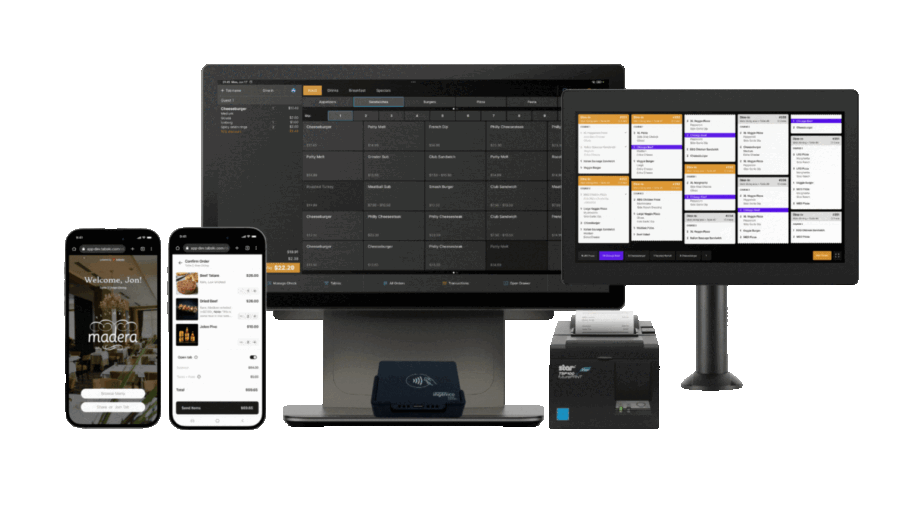
Why Food Halls Need Specialized POS Systems
Food halls aren’t restaurants. They’re not shopping malls. They’re complex multi-vendor ecosystems where 5-15 independent businesses share one roof, one guest experience, and often one payment flow.
Traditional restaurant POS systems like Square, Toast, and Clover weren’t built for this. They’re designed for single operators with unified menus, not venues juggling multiple vendors, split payments, automated rent collection, and cross-vendor ordering.
In 2026, food hall operators face these challenges:
- Guest friction – Long lines at separate vendor counters kill conversion
- Fragmented reporting – No unified view of venue performance
- Manual rent reconciliation – Chasing percentage-based rent payments monthly
- Limited cross-selling – Guests can’t easily order tacos + drinks + dessert in one transaction
- Vendor management complexity – Different POS systems = data chaos
The solution? Purpose-built food hall POS systems that handle multi-vendor complexity natively.
This guide compares the top food hall POS platforms in 2026, ranked by multi-vendor capabilities, ease of use, and total cost of ownership.
Quick Comparison Table
| POS System | Best For | Multi-Vendor Ordering | Automated Rent | Starting Price | Contract |
|---|---|---|---|---|---|
| Tabski | Purpose-built food halls | ✅ Native | ✅ Yes | Custom | Flexible |
| GoTab | Entertainment venues + food halls | ✅ Native | ✅ Yes | ~$200/mo | Flexible |
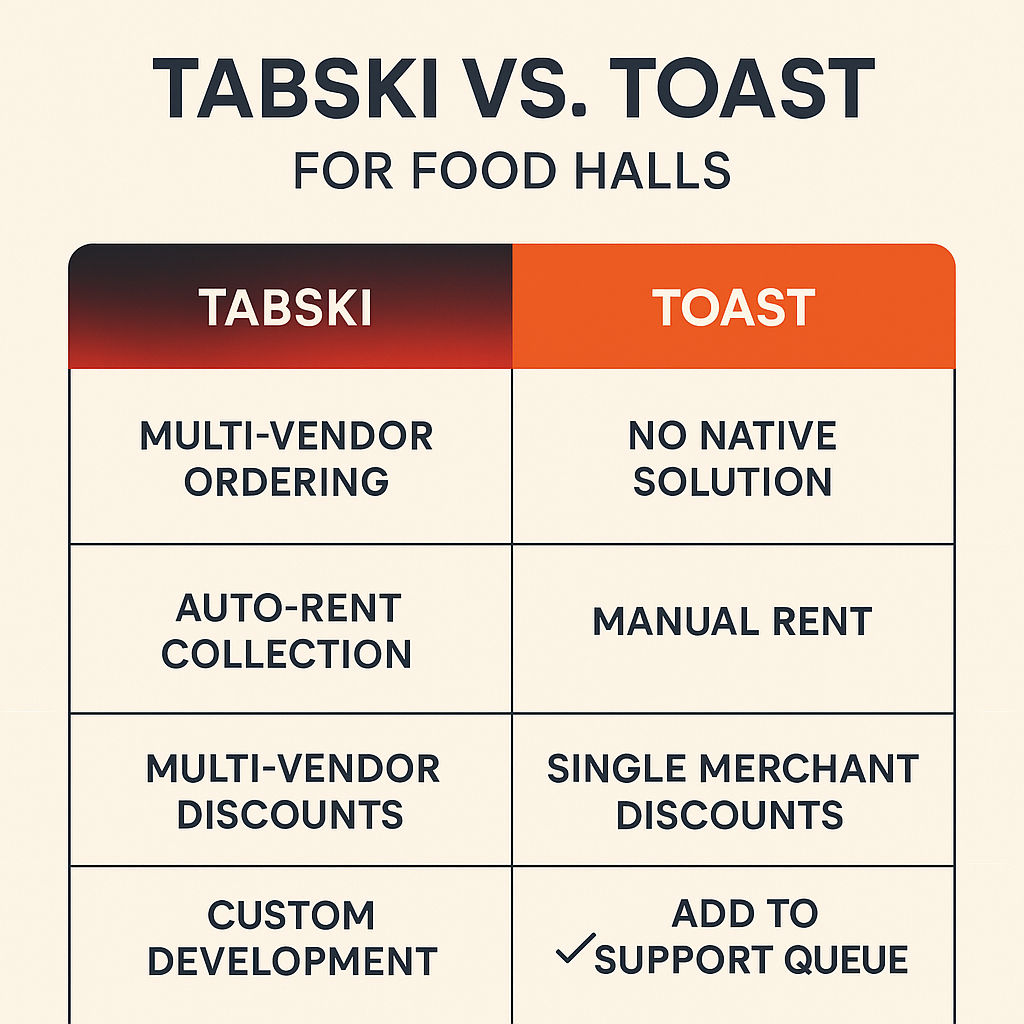
| Toast | Single-brand restaurants trying food halls | ⚠️ Workarounds | ❌ Manual | ~$165/mo | 2-3 years |
| Square | Small food halls (3-5 vendors) | ⚠️ Limited | ❌ Manual | Free-$89/mo | None |
| Clover | Retail + food hybrid spaces | ⚠️ Limited | ❌ Manual | $799+ hardware | Varies |
#1: Tabski – Best Purpose-Built Food Hall POS
Rating: ⭐⭐⭐⭐⭐ (5/5)
Best For: Food halls, multi-vendor markets, brewery complexes
What Makes Tabski Different
Tabski is the only POS system designed exclusively for food halls and multi-vendor venues. Every feature—from multi-vendor ordering to automated rent collection—is built natively into the platform, not retrofitted as an afterthought.
Key Features:
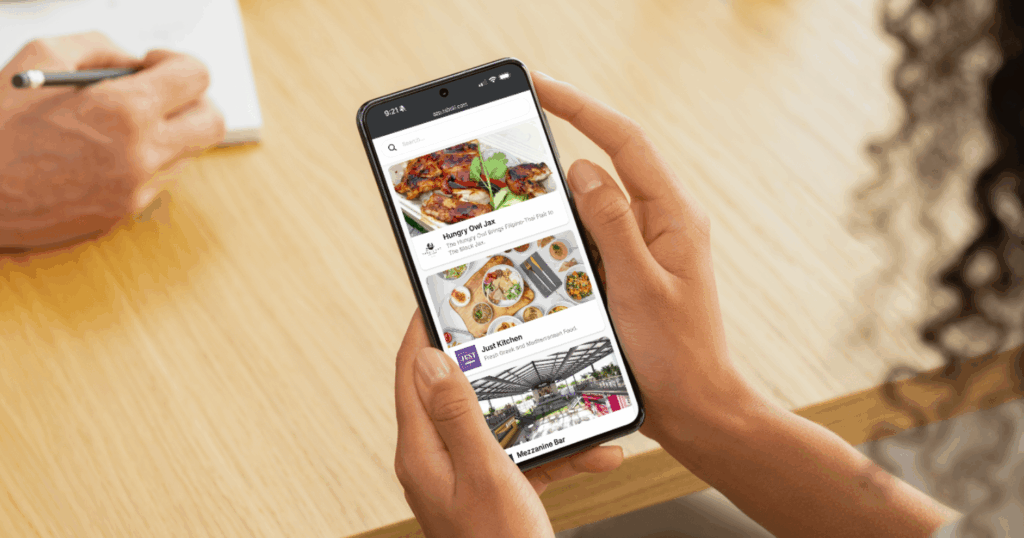
✅ Multi-Vendor Ordering – Guests order from multiple vendors in one cart, pay once, orders route automatically to correct kitchens
✅ Automated Rent Collection – Daily percentage-based rent splits with zero manual reconciliation
✅ Tenant-Level Reporting – Each vendor gets isolated dashboard; operators see venue-wide analytics
✅ Order Throttling & Pacing – Prevents kitchen overload during rush by intelligently queuing orders
✅ Unified KDS – Kitchen Display System routes tickets to correct vendors automatically
✅ Dynamic Pricing – Adjust prices by demand, daypart, or event
✅ Branded Mobile Apps – White-label apps for guest loyalty and direct ordering
✅ Bar Workflows – Tabs, splits, tips, comps built for high-speed bar environments
Pricing:
Custom pricing based on venue size, vendor count, and feature requirements. Flexible agreements—no forced multi-year contracts.
Pros:
- Purpose-built for food halls (no workarounds needed)
- Handles complex multi-vendor scenarios natively
- Strong vendor management and tenant reporting
- Order throttling prevents kitchen disasters
- Excellent for venues with 5+ vendors
Cons:
- Not ideal for single-location restaurants
- Custom pricing (not transparent online)
- Newer player vs. established brands
Case Studies:
- MIA Market (Miami) – Unified 10+ vendors, reduced lines, captured platform fee revenue
- MiXt Food Hall – Added multi-vendor layer without replacing existing POS systems
- The Block Jax – Full unified POS, KDS, ordering, delivery, and rent automation
Who Should Choose Tabski:
- Food hall operators with 5+ vendors
- Venues needing automated rent collection
- Operators tired of duct-taping general restaurant POS systems
- New food hall developments planning tech stack from scratch
#2: GoTab – Best for Entertainment Venues + Food Halls
Rating: ⭐⭐⭐⭐½ (4.5/5)
Best For: Breweries with food vendors, entertainment venues, food halls with self-pour
What Makes GoTab Stand Out
GoTab started in the brewery space and expanded to food halls. Their strength is RFID-based ordering (GoTab Pass) and self-pour integrations, making them ideal for venues combining food, drinks, and entertainment.
Key Features:
✅ GoTab Pass (RFID) – Guests get a card/wristband to order across vendors and self-pour taps
✅ Multi-Vendor Ordering – Single cart across vendors with automatic routing
✅ Shared Tabs – Groups can split bills by item, person, or amount
✅ Self-Pour Integration – Seamless connection to PourMyBeer and other tap systems
✅ Vendor Payouts – Automated revenue sharing and tip allocation
✅ Mobile Ordering – QR codes for tableside/venue-wide ordering
✅ KDS Integration – Routes orders to correct kitchens
Pricing:
Starts around $200/month per terminal. Hardware costs extra. No long-term contracts.
Pros:
- Excellent for breweries + food vendor combos
- RFID ordering creates frictionless guest experience
- Strong self-pour tap integration
- Good for entertainment-focused venues (music, events)
- Flexible contracts
Cons:
- Not as purpose-built for pure food halls as Tabski
- Higher cost vs. entry-level systems
- Learning curve for RFID setup
Case Studies:
- The Golden Mill (Golden, CO) – 56-tap self-pour wall, 5 vendors, 3,000-4,000 tabs/night
- Market at Malcolm Yards (Minneapolis) – 10 concepts + self-pour wall, 60% alcohol sales via self-pour
- CRAVE Food Hall (Ocean Springs, MS) – Mississippi’s only food hall, QR ordering across 8 vendors
Who Should Choose GoTab:
- Breweries with multiple food vendors
- Food halls with self-pour beverage walls
- Entertainment venues (live music, events, dog parks)
- Venues wanting RFID wristband/card ordering
#3: Toast – Best for Traditional Restaurants (Limited Food Hall Use)
Rating: ⭐⭐⭐☆☆ (3/5 for food halls)
Best For: Single-brand restaurants, restaurant chains
Why Toast Ranks Lower for Food Halls
Toast is a fantastic restaurant POS—one of the best for traditional sit-down restaurants. But it’s not designed for multi-vendor food halls. Operators using Toast in food halls report needing significant workarounds for:
- Multi-vendor ordering (requires separate transactions)
- Automated vendor payouts (manual reconciliation)
- Unified guest experience (each vendor feels separate)
Key Features:
✅ Robust Restaurant Features – Inventory, labor, loyalty, reservations
✅ KDS Built-In – Excellent kitchen display system
✅ Online Ordering – Native online ordering and delivery integrations
✅ Strong Reporting – Detailed analytics for single operators
⚠️ Multi-Vendor Limitations – Not designed for shared-space venues
Pricing:
Starts at $165/month per terminal. 2-3 year contracts typical. Hardware costs extra ($800-$1,500 per station).
Pros:
- Industry-standard for restaurants
- Deep feature set for inventory, labor, scheduling
- Strong third-party integrations (DoorDash, Uber Eats, etc.)
- Excellent for restaurant chains
Cons:
- Not purpose-built for food halls – Requires workarounds
- Multi-vendor ordering is clunky (multiple transactions)
- No automated rent collection
- Long contracts (2-3 years)
- Higher total cost of ownership
Who Should Choose Toast:
- Single-brand restaurants
- Restaurant groups with multiple locations
- Full-service restaurants needing deep inventory/labor tools
- NOT recommended for true multi-vendor food halls
#4: Square – Best for Small Food Halls (3-5 Vendors)
Rating: ⭐⭐⭐☆☆ (3/5 for food halls)
Best For: Small food halls, food truck parks, startup concepts
Why Square Works for Small Halls
Square’s strength is ease of use and low cost. It’s perfect for food halls just starting out with 3-5 vendors who don’t need sophisticated multi-vendor features yet.
Key Features:
✅ Free Plan Available – $0/month for basic POS
✅ Easy Setup – Same-day deployment possible
✅ No Contracts – Cancel anytime
✅ Basic KDS – $20/month per device
✅ Online Ordering – Free website builder included
⚠️ Limited Multi-Vendor – Each vendor needs separate Square account
Pricing:
Free plan available. Paid plans start at $49/month. Payment processing: 2.6% + 10¢ per transaction.
Pros:
- Free to start (low risk)
- No contracts or commitments
- Very easy to use
- Good for small, scrappy operations
- Works on existing tablets
Cons:
- Not designed for multi-vendor complexity
- Each vendor needs separate Square account (fragmented reporting)
- No automated rent collection
- No unified multi-vendor ordering
- Limited scalability beyond 5 vendors
Who Should Choose Square:
- Food halls with 3-5 vendors
- Popup food halls or temporary concepts
- Budget-conscious operators
- Operators who don’t need advanced multi-vendor features
#5: Clover – Best for Retail + Food Hybrids
Rating: ⭐⭐⭐☆☆ (3/5 for food halls)
Best For: Retail + food hybrid spaces, convenience stores with food
Why Clover Ranks Lower for Pure Food Halls
Clover excels at retail + restaurant combos but lacks native multi-vendor food hall features. It’s better suited for single operators running a store + café, not multi-tenant food halls.
Key Features:
✅ Retail Strengths – Excellent for retail inventory
✅ Hardware Options – Multiple terminal types
✅ App Market – Customizable with third-party apps
⚠️ Multi-Vendor Limitations – Not designed for food halls
Pricing:
Hardware: $799-$1,799 upfront. Software: ~$60-$185/month depending on plan.
Pros:
- Strong retail capabilities
- Flexible hardware options
- Good for convenience stores + food service
- App marketplace for customization
Cons:
- Not built for multi-vendor food halls
- No native multi-vendor ordering
- No automated rent collection
- Higher upfront hardware costs
How to Choose the Right Food Hall POS in 2026
Ask Yourself These Questions:
- How many vendors do we have?
- 3-5 vendors → Square or Toast might work
- 5-15+ vendors → Tabski or GoTab
- Do we need automated rent collection?
- Yes → Tabski or GoTab
- No → Square or Toast
- Do we have self-pour beverage walls?
- Yes → GoTab (RFID integration is best-in-class)
- No → Tabski or others
- What’s our budget?
- Startup/low budget → Square (free plan)
- Mid-budget → GoTab (~$200/mo)
- Enterprise → Tabski (custom pricing)
- Do guests need to order from multiple vendors in one transaction?
- Must-have → Tabski or GoTab
- Nice-to-have → Toast with workarounds
- Don’t care → Square
Red Flags to Avoid:
❌ Long-term contracts (2-3 years) without exit clauses
❌ Hidden fees (setup, training, hardware leases)
❌ POS systems that require replacing all vendor equipment
❌ Systems without native KDS integration
❌ Platforms that lock you into their payment processor with high rates
Final Recommendations by Venue Type
Best for Large Multi-Vendor Food Halls (10+ Vendors):
Winner: Tabski
Purpose-built for complexity, automated rent, vendor reporting, order throttling.
Best for Breweries + Food Vendors:
Winner: GoTab
RFID ordering, self-pour integration, entertainment venue features.
Best for Small Startup Food Halls (3-5 Vendors):
Winner: Square
Low cost, no contracts, easy setup.
Best for Traditional Restaurants (Not Food Halls):
Winner: Toast
Industry standard for single-operator restaurants.
Get Expert Help Choosing Your Food Hall POS
Still not sure which system fits your venue? We offer free consultation calls to help food hall operators evaluate their options.
What we’ll cover:
- Your vendor count and service model
- Must-have features vs. nice-to-haves
- Total cost comparison (software + hardware + processing fees)
- Implementation timeline and training needs
FAQ: Food Hall POS Systems
Q: Can I use different POS systems for different vendors?
A: Technically yes, but this creates fragmented reporting, no unified guest experience, and manual rent reconciliation. Purpose-built food hall systems (Tabski, GoTab) solve this.
Q: How much does a food hall POS typically cost?
A: Ranges from $0 (Square free plan) to $200-500/month for specialized systems. Factor in hardware (~$800-$2,000 per station) and payment processing fees (2-3%).
Q: Do food hall POS systems integrate with delivery apps?
A: Yes. Tabski, GoTab, Toast, and Square all integrate with DoorDash, Uber Eats, and other platforms.
Q: What’s the biggest mistake food halls make with POS selection?
A: Choosing a general restaurant POS (Toast, Square) and trying to force it into multi-vendor scenarios with duct-tape workarounds. Start with purpose-built systems.
Q: Can I switch POS systems later?
A: Yes, but it’s painful. Choose carefully upfront. Avoid long contracts if you’re unsure.
Ready to upgrade your food hall POS? Compare your options with a Tabski demo →
📊 Choosing a Food Hall POS?
Read our detailed comparison: