
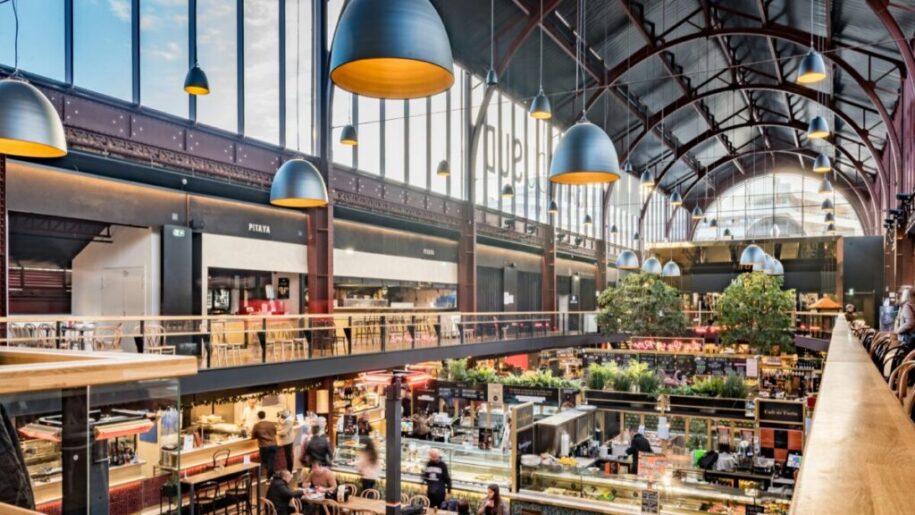
Food halls are complex little cities: dozens of semi-independent vendors, shared seating, centralized bars, event spaces, and a landlord who needs clean, audit-ready financials every day. It’s no surprise many halls start out on mainstream restaurant POS platforms like Square or Toast—they’re familiar, fast to deploy, and great for single-concept restaurants.
But as stalls open, lines form, and revenue splits get real, operators start “retrofitting” these systems to behave like a multi-vendor marketplace. That’s when the cracks show.
Below is a practical look at how retrofits usually happen, why they create friction, and how modern multi-vendor workflows solve the same problems by design.
The Most Common Retrofits (and Their Side Effects)
1) “One POS per stall”
The hack: Treat each vendor as a completely separate restaurant instance.
Side effects:
- Duplicated menu ops: Every item, modifier, price change, and 86 has to be repeated across multiple systems (and often again for kiosks and online).
- Fragmented guest experience: Guests can’t open a single tab, mix items from multiple vendors, or check out once.
- Lost courtyard sales: A guest who wants tacos + boba + dessert hits three lines (or three QR codes), and conversion drops with each hop.
2) “Make the bar the hub”
The hack: Run the central bar as the only “full” POS; push food orders through it as revenue centers.
Side effects:
- Reconciliation chaos: Revenue is collected under the bar’s merchant account, then carved up later. Chargebacks, comps, and refunds are hard to allocate fairly.
- Menu ownership confusion: Who edits prices, happy hours, or 86s—the bar manager or the stall?
- Service bottlenecks: Bar staff becomes a switchboard for everyone’s orders.
3) “All-in-one kiosk as a single merchant”
The hack: One kiosk with a mega-menu; print tickets to each stall.
Side effects:
- Tax/service charge landmines: Different vendors may require different tax rates, surcharges, or gratuity rules; a single merchant profile can’t apply them cleanly.
- Reporting blur: Sales, tips, and discounts need to be disentangled daily—usually in spreadsheets.
- Chargeback risk: A customer disputes a multi-vendor order; who “owns” the charge?
4) “Tip pooling by spreadsheet”
The hack: Let each POS capture tips separately, then normalize.
Side effects:
- Compliance risk: Automatic service charges vs. tips vs. barbacks vs. runners—misclassification can trigger labor issues.
- Morale hit: Staff perceives tip math as opaque or unfair, especially when multi-vendor orders cross teams.
5) “Kitchen printers everywhere”
The hack: Print tickets and tape them to stalls.
Side effects:
- Lost orders & remakes: Paper disappears and remakes go untracked.
- No expo logic: You can’t throttle or route intelligently across peak stations.
- No SLA visibility: Operators can’t see stall-level ticket times, so coaching is guesswork.
Where Retrofitted Restaurant POS Collides with Food Hall Reality
- Multi-party settlement: Landlords need daily or weekly splits (base rent, % rent, utilities, marketing fee, convenience fees) with clean audit trails. Single-restaurant settlement flows weren’t designed for this.
- Cross-vendor carts & tabs: Guests expect to browse multiple stalls, order from one cart, and keep a single open tab across the courtyard and bar.
- Shared but governed data: Vendors want autonomy (their own 86s, modifiers, photos) while the hall wants central guardrails (hours, brand standards, allergen flags).
- Role-based permissions: Hall managers, vendor owners, bar leads, runners, and cleaners all need different slices of data and controls. Traditional role sets are too coarse.
- Menu & inventory orchestration: A mango shortage at Stall A should hide mango smoothies from the kiosk, online menus, and QR codes within seconds—without touching three dashboards.
- Order routing & throttling: Saturated fryers? Expo needs to slow or reroute anything “fried” across multiple stalls. Basic KDS/print rules can’t reason across vendors.
- Unified loyalty & promotions: Guests want one loyalty identity, one promo wallet, and hall-wide gift cards that work at any stall, without back-office gymnastics.
Tell-Tale Symptoms It’s Time to Re-Platform
- Your night ends with Excel. If the day’s last step is a reconciliation spreadsheet, you’re paying a hidden payroll tax.
- Comp/refund disputes drag on. Finance can’t tie a dispute back to specific stalls, line items, or staff actions.
- Menu changes cause outages. “We 86’d wings but the kiosk still sold them for an hour.”
- Operators babysit printers/KDS. Managers are chasing paper, not coaching teams.
- Guests ask, “Why can’t I check out once?” Or, “Why can’t the bar add my dumplings to my tab?”
What a Food-Hall-Native Stack Looks Like
Think of a marketplace-first POS rather than a restaurant POS with patches:
- True multi-merchant cart: One order can hold items from multiple vendors, each with its own tax, printer/KDS routing, and prep SLA.
- Per-vendor wallets but shared identity: Loyalty, gift cards, and promotions attach to a single guest profile; redemptions respect vendor rules.
- Automated settlement engine: Every order line is tagged to a vendor and fee structure at the time of authorization; the platform generates vendor payouts and landlord remittances automatically.
- Role-aware dashboards: Hall-level views for rent, fees, and traffic; vendor views for COGS, menu, and labor; bar views for tabs and age checks.
- Menu orchestration layer: Central attributes (allergens, categories, photography) with vendor-controlled pricing, 86s, and availability—propagated everywhere in seconds.
- Expo-grade routing & throttling: Dynamic ticket time targets per stall, course routing, and “slow kitchen” dampeners that adjust online/kiosk promise times automatically.
- Open-tab mobility: Guests open a tab via QR; bartenders and stalls can add to it; guests close out anywhere.
Implementation Playbook (That Won’t Break Service)
- Stand up read-only data feeds first. Mirror orders/sales from the legacy stack and compare payout math for 1–2 weeks. Fix your chart of accounts and tax map now.
- Pilot with the bar and 1–2 high-volume stalls. Stress-test cross-vendor carts, refunds, and printing/KDS routing during controlled hours.
- Migrate payment flows per stall. Roll vendors onto the new system in waves, keeping your kiosk/QR linking strategy stable to avoid guest confusion.
- Freeze menu taxonomy for go-live week. Lock categories, allergens, and modifiers so staff learns workflows without chasing a moving target.
- Train by role, not by feature. Vendors get menu/86 + station KDS. Bar gets tabs + ID checks. Managers get expo + settlement dashboards.
- Audit payouts daily for two weeks. Compare platform payouts to expected rent splits and fees; fix any edge-case math before turning off spreadsheets.
KPIs That Prove It Worked
- Avg. ticket time (by stall & item family) down 10–25% via routing/throttling.
- Cart combination rate (orders containing ≥2 vendors) up 20–40%.
- Chargeback resolution time down 50% with line-level ownership.
- Manual reconciliation hours near zero; payouts happen on rails.
- Menu error rate (sold-out items sold, wrong modifiers) approaching zero.
A Note on Costs vs. “Free” Retrofitting
Retrofitting looks cheap until you quantify: manager hours, finance hours, remakes, lost carts, bar bottlenecks, and guest churn from friction. Marketplace-native systems usually pay for themselves by eliminating hidden labor and unlocking higher-margin multi-vendor carts and courtyard bar tabs.
Bottom Line
Square and Toast are excellent for single-concept restaurants. Food halls are a different operating system. If your team is juggling multiple merchant accounts, spreadsheets for tip pools, and nightly menu syncs, you’re not “hacking”—you’re subsidizing missing features with payroll.
Choose a stack that treats your hall like what it is: a marketplace with many sellers, one guest journey, and clear, automated money flows. Your vendors, your bar team, and your finance department will feel the difference by the second weekend.